
X-Ray After Car Accident: Urgent Care or Emergency Room?
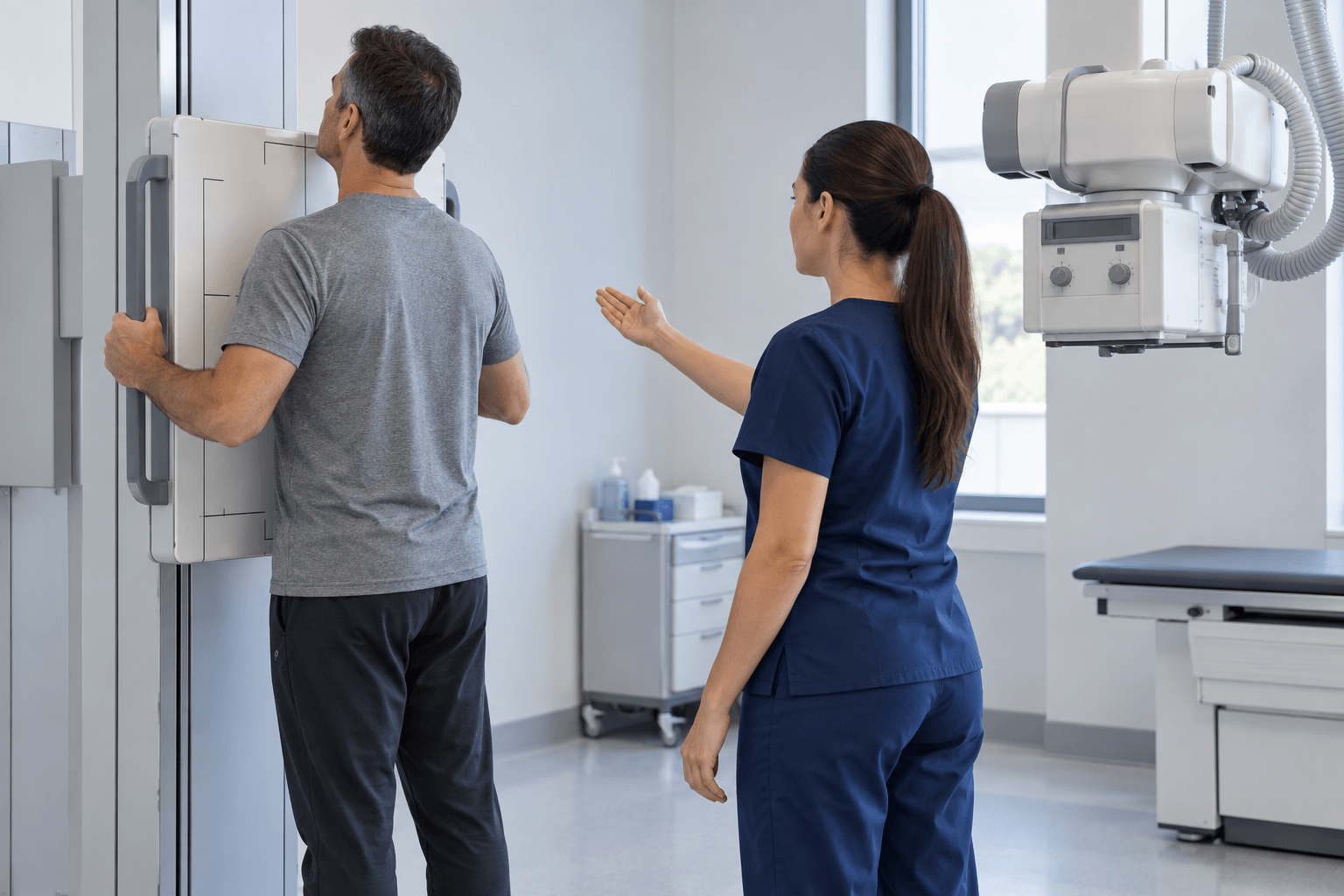
A car accident can leave you shaken, sore, and uncertain about whether you need medical imaging. Some injuries cause immediate pain, while others become noticeable hours or even days later after the initial stress and adrenaline wear off. If you develop pain, swelling, stiffness, or trouble moving after a collision, a healthcare provider may recommend an X-ray after a car accident to check for bone or joint injuries. However, not every collision requires an X-ray, and not every injury can be identified through this type of imaging. Your symptoms, the location of your pain, the force of the impact, and your overall condition will help determine whether you should visit urgent care or go directly to an emergency room.
Why You May Need an X-Ray After a Car Accident
During a collision, the body can be pushed, twisted, or struck with significant force. A seat belt, airbag, steering wheel, dashboard, or side door may place sudden pressure on the bones and joints. Even a relatively low-speed collision may cause an injury that is not visible from the outside. A healthcare provider may recommend an X-ray if you have localized pain, tenderness over a bone, significant swelling, bruising, limited movement, or difficulty putting weight on an injured area. The examination helps determine whether the symptoms could be related to a fracture, dislocation, or another bone or joint problem. Getting evaluated soon after the accident also creates a medical record of your symptoms, examination findings, diagnostic tests, and treatment. This documentation may be helpful when communicating with your health insurer, auto insurance company, or another healthcare provider.
What Can a Car Accident X-Ray Detect?
X-rays create images of dense structures inside the body, particularly bones. They are often one of the first imaging tests considered when a healthcare provider suspects a fracture or joint injury. An X-ray may help identify:
- •Simple fractures and broken bones
- •Certain hairline fractures
- •Joint dislocations
- •Changes in bone alignment
- •Some chest and rib injuries
- •Certain foreign objects
- •Existing bone or joint conditions that may affect treatment
The provider will decide which part of the body should be imaged based on your symptoms and physical examination. Common areas evaluated after a collision include the wrists, arms, shoulders, ribs, knees, ankles, hips, and other painful joints or bones. An X-ray may also help guide immediate treatment. For example, a confirmed minor fracture may require a splint, activity restrictions, pain-management guidance, and follow-up with an orthopedic specialist.
What Injuries May Not Appear on an X-Ray?
An X-ray has important limitations. It provides useful images of bones, but it usually cannot clearly show muscles, tendons, ligaments, spinal discs, nerves, the brain, or many internal organs. Conditions that may not be visible on a standard X-ray include:
- •Whiplash
- •Muscle strains
- •Ligament sprains
- •Tendon injuries
- •Many spinal disc injuries
- •Nerve irritation
- •Concussion
- •Internal bleeding
- •Certain very small or early fractures
A normal X-ray does not necessarily mean that nothing is wrong. It may mean that no obvious bone injury was seen on that particular study. If symptoms continue or the provider suspects another type of injury, further evaluation, follow-up care, CT imaging, MRI, ultrasound, or specialist assessment may be recommended.
Can an X-Ray Diagnose Whiplash?
Whiplash commonly develops when the head and neck move rapidly backward and forward during a collision. The movement can strain muscles, ligaments, and other soft tissues in the neck. Because these are primarily soft-tissue structures, whiplash itself usually does not appear on a standard X-ray. A provider may still order an X-ray when neck pain follows a collision, particularly when there is concern about a fracture or abnormal bone alignment. The provider may also examine your neck movement, tenderness, strength, sensation, reflexes, and other neurological signs. In higher-risk cervical spine trauma, CT may be more appropriate than standard radiography. The American College of Radiology notes that CT has largely replaced radiography for assessing many traumatic cervical spine injuries. Do not force your neck to move or assume that neck pain is only whiplash before receiving an appropriate medical assessment.
Head Injury Urgent Care After a Motor Vehicle Accident
A head injury can occur when the head strikes part of the vehicle or moves suddenly during impact. You do not necessarily have to lose consciousness to experience a concussion or another head injury. Possible mild concussion symptoms include headaches, dizziness, balance problems, nausea, sensitivity to light or noise, fatigue, difficulty concentrating, memory problems, and feeling mentally foggy. These symptoms may appear immediately or develop later. Standard X-rays cannot show a concussion or injury to the brain. Concussion is typically evaluated through medical history, symptom review, and neurological examination. Even CT and MRI are not routinely needed to identify a mild concussion, although CT may be used when a provider is concerned about bleeding or another serious injury inside the skull.
Prompt Urgent Care provides evaluation for non-emergency motor vehicle accident injuries, including post-crash headaches, dizziness, and possible mild concussion symptoms. Learn more about when head injury urgent care may be appropriate. Go directly to the emergency room if the injured person has worsening confusion, repeated vomiting, seizure, loss of consciousness, severe or worsening headache, weakness, slurred speech, unequal pupils, or unusual behavior.
When Urgent Care May Be Appropriate After a Car Accident
Urgent care may be suitable when you are medically stable and your injuries do not appear life-threatening. It can be a practical option for pain, swelling, bruising, mild stiffness, minor cuts, suspected sprains, and possible simple fractures. Prompt Urgent Care evaluates a range of non-emergency motor vehicle accident and injury concerns, including:
- •Whiplash and neck strain
- •Back and muscle pain
- •Sprains and strains
- •Bruising and contusions
- •Minor cuts and scrapes
- •Joint and soft-tissue injuries
- •Post-crash headaches and dizziness
- •Suspected simple fractures
The healthcare team can perform an examination, decide whether imaging is appropriate, treat certain minor injuries, provide splinting or wound care, and recommend follow-up when needed. If the evaluation suggests a more serious condition, the patient may be directed to an emergency department or specialist. Prompt Urgent Care accepts walk-ins, so no appointment or referral is required.
When Should You Go to the Emergency Room Instead?
An emergency room is the safer choice when the collision involved significant force or when symptoms may indicate a serious head, spine, chest, abdominal, or internal injury. Hospitals can provide CT scans, advanced imaging, continuous monitoring, surgical consultation, and emergency treatment that may not be available at urgent care. Call 911 or go to the nearest emergency room if you or another person experiences:
- •Loss of consciousness, confusion, or unusual behavior
- •Severe or worsening headache
- •Repeated vomiting or seizure
- •Chest pain or difficulty breathing
- •Heavy or uncontrolled bleeding
- •Severe abdominal pain, tenderness, or swelling
- •Weakness, numbness, or difficulty moving a limb
- •Severe neck or back pain
- •An obvious deformity or open fracture
- •Loss of bladder or bowel control
- •Signs of shock, including fainting or pale, clammy skin
CT imaging can reveal internal injury and bleeding more effectively than a standard X-ray in emergency trauma situations. If you are uncertain whether an injury is serious, choose the emergency room.
What Happens During an Urgent Care Evaluation?
Your visit normally begins with a discussion of the crash. The healthcare provider may ask when it occurred, whether you were the driver or passenger, where the vehicle was hit, whether you wore a seat belt, whether the airbags deployed, and whether your head or body struck anything. The provider will also ask when your symptoms started and whether they have changed. A physical examination may include checking painful areas for swelling, tenderness, bruising, movement, strength, sensation, and circulation. If an X-ray is medically appropriate, images will be taken of the affected area. The results will be considered alongside the examination rather than treated as the only source of information. Depending on the findings, the treatment plan may include a brace or splint, wound care, pain-management instructions, activity limitations, referral, and follow-up care.
On-Site Digital X-Rays at Prompt Urgent Care
Prompt Urgent Care provides on-site digital X-ray services, allowing suitable patients to receive an examination and imaging during the same urgent care visit. This can reduce the need to travel to a separate imaging facility for suspected minor fractures or certain bone and joint injuries. The healthcare team may use X-rays to evaluate:
- •Suspected simple fractures
- •Painful or injured joints
- •Possible dislocations
- •Certain rib or chest concerns
- •Bone alignment following an injury
Patients searching for a chest X-ray near me can visit Prompt Urgent Care for an initial evaluation. A provider will determine whether a chest X-ray is appropriate or whether hospital-based imaging is needed. Prompt Urgent Care offers walk-in care with no appointment required. Uninsured patients can access a transparent $95 visit fee; confirm separately with the clinic what imaging or additional services include and cost.
What Should You Bring to Your Accident-Injury Visit?
You should not delay medically necessary care because you do not have every document available. However, bringing relevant information can make check-in, documentation, and insurance processing easier. When available, bring:
- •A government-issued photo ID
- •Your health insurance card
- •Auto insurance information
- •Your accident claim number
- •The date and basic details of the collision
- •A list of your current medications
- •Relevant previous medical or imaging records
Tell the provider about every symptom you have noticed, even if it initially seems minor. Explain whether pain began immediately or later and whether it has become better, worse, or spread to another area.
Why Medical Documentation Matters After a Crash
Clear medical documentation helps create a timeline between the collision and your symptoms. Your record may include how the accident occurred, when symptoms began, examination findings, X-ray results, treatment provided, and follow-up recommendations. Prompt Urgent Care can provide appropriate medical documentation for insurance or related claim needs. However, the clinic provides medical care and is not a law firm. The healthcare team cannot determine fault or provide legal advice. Texas auto policies generally include Personal Injury Protection unless the policyholder rejects it in writing. PIP can help cover certain medical expenses and lost-income benefits after an auto accident. Coverage limits and requirements vary, so patients should contact their insurer for information about their policy.
Should You Get Checked If Pain Starts Days Later?
Yes, delayed pain should not automatically be dismissed. Adrenaline, stress, inflammation, and the gradual development of muscle stiffness can make some injuries more noticeable after the accident. Delayed symptoms may include neck stiffness, back pain, headaches, dizziness, shoulder discomfort, bruising, reduced movement, or pain when putting weight on a limb. A healthcare provider can evaluate whether these symptoms are consistent with a minor injury or require X-Ray After Car Accident or specialist care. Tell the provider exactly when the symptoms started. Avoid claiming that the pain began immediately if it did not. An accurate timeline supports better medical decisions and clearer documentation.
What If Your X-Ray Is Normal but You Still Have Pain?
A normal X-ray is reassuring when it rules out an obvious fracture or dislocation, but it does not exclude every possible injury. Pain may come from a muscle strain, ligament sprain, tendon injury, nerve irritation, spinal disc problem, concussion, or another condition that is not clearly visible on standard X-rays. Follow the treatment and monitoring instructions you receive. Return for reassessment if pain worsens, new symptoms appear, swelling increases, or movement does not improve. Depending on your condition, the provider may recommend additional imaging, physical therapy, primary care follow-up, or a specialist evaluation.
Choose the Right Level of Care After a Crash
An X-ray after car accident can help identify fractures, dislocations, and certain bone or joint injuries, but the decision to order one should be based on a professional medical evaluation. Urgent care may be appropriate for stable patients with non-life-threatening pain, stiffness, sprains, cuts, bruising, or suspected minor fractures. The emergency room is the correct choice for severe head trauma, breathing difficulty, heavy bleeding, neurological symptoms, major deformity, or possible internal injury. Prompt Urgent Care provides motor vehicle accident evaluations, on-site digital X-rays, minor injury treatment, and documentation in San Antonio. Walk in without an appointment or call 210-585-2273 for clinic information.
Frequently Asked Questions
No. Not every accident requires an X-ray. The need for imaging depends on your symptoms, examination findings, the affected body area, and the force involved in the collision. A healthcare provider should determine whether an X-ray or another test is appropriate.
Seek evaluation promptly if you have localized bone pain, swelling, bruising, reduced movement, joint instability, or difficulty putting weight on an injured limb. Emergency symptoms should be assessed at a hospital rather than delayed for an outpatient X-ray.
An X-ray cannot directly show the muscle and ligament damage associated with whiplash. It may be used to look for fractures, dislocations, or bone-alignment problems when neck pain follows a collision.
No. A standard X-ray cannot show the brain or diagnose a concussion. Concussion is assessed through symptoms, medical history, and a neurological examination. A CT scan may be ordered when there is concern about bleeding, swelling, or a skull fracture.
Yes, some urgent care clinics have on-site X-ray equipment. Prompt Urgent Care provides on-site digital X-rays for appropriate non-emergency injuries. A healthcare provider will first evaluate you and decide which body area, if any, needs imaging.
Yes. Prompt Urgent Care evaluates non-life-threatening crash injuries, including neck strain, back pain, sprains, bruising, minor wounds, post-crash headaches, and suspected simple fractures. Patients with serious warning signs should call 911 or go directly to an emergency room.