
Can I Go to Urgent Care for Chest Pain? What You Need to Know
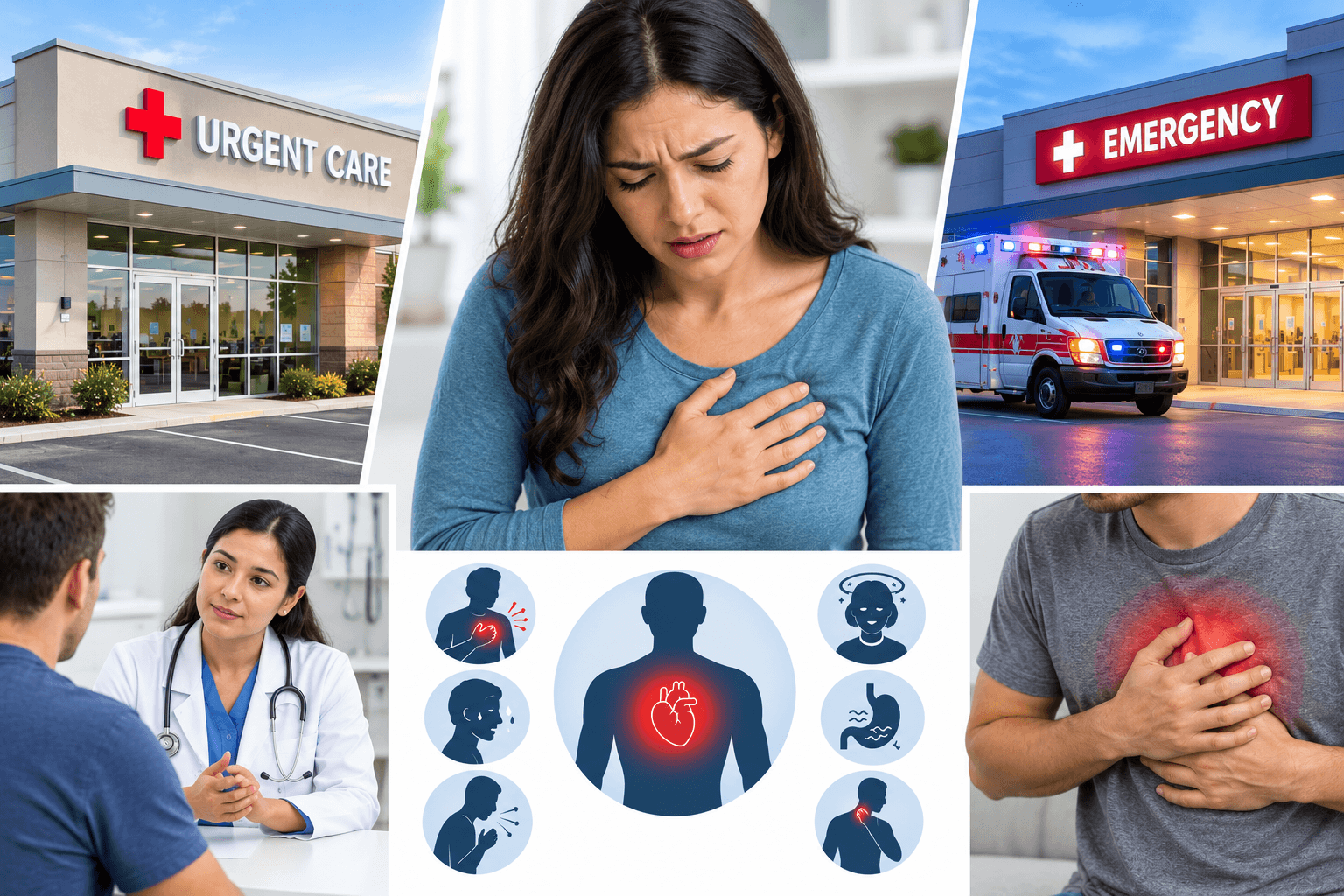
Chest pain can be difficult to judge. Sometimes it is caused by something relatively minor, such as muscle strain, acid reflux, or inflammation around the ribs. In other cases, it can be a warning sign of a heart attack, blood clot, or another serious medical condition. This leaves many people asking, “Can I go to urgent care for chest pain?” The answer depends on what the chest pain feels like, how suddenly it started, how long it has lasted, and whether you have other symptoms. Urgent care can be appropriate for some types of mild or non-life-threatening chest discomfort. However, severe, persistent, sudden, or unexplained chest pain may require emergency medical care rather than an urgent care visit. If you think you could be having a heart attack, call 911 immediately. The American Heart Association recommends calling 911 when heart attack warning signs are present because emergency medical personnel can begin treatment and arrange rapid transportation to a hospital.
Important: This article provides general health information and is not a substitute for an examination or diagnosis from a healthcare professional. If you are experiencing severe or potentially serious chest pain now, call 911 or seek emergency medical care.
Can I Go to Urgent Care for Chest Pain?
Yes, you can go to urgent care for certain types of chest pain, particularly when the symptoms are mild, stable, and do not suggest an immediate medical emergency. Urgent care can be a practical option when you need medical attention quickly but do not appear to need the advanced emergency services available at a hospital. Chest pain has many possible causes, and not all of them are related to the heart. A strained chest muscle, minor injury, costochondritis, acid reflux, or a respiratory illness can cause discomfort in the chest. Some people may also experience chest tightness or discomfort during periods of anxiety or stress. Because these conditions can produce symptoms that feel similar to one another, it is not always possible to determine the cause based on the sensation alone.
When you visit an urgent care clinic, a healthcare provider can ask about your symptoms, review your medical history, check your vital signs, and perform a physical exam. Depending on your symptoms and the clinic’s services, testing may include an electrocardiogram (EKG), blood pressure measurement, lab work, or imaging. However, urgent care is not suitable for every type of chest pain. Clinics may lack the resources available in hospital emergency departments to treat heart attacks, severe breathing problems, and other life-threatening conditions. If your symptoms suggest a serious medical problem, seek emergency care immediately.
When there are no emergency warning signs but the chest discomfort is new, concerning, or needs prompt evaluation, urgent care may be an appropriate place to start.
When Chest Pain Requires Emergency Care
Not all chest pain requires a trip to the emergency room, but certain symptoms can indicate a serious or life-threatening condition. A heart attack is one of the most important causes to consider, particularly when chest discomfort is new, persistent, or accompanied by other concerning symptoms.
Signs That Chest Pain May Be an Emergency
Heart-related chest discomfort is often described as pressure, squeezing, heaviness, fullness, or tightness rather than a sharp pain. It may occur in the center of the chest, last for several minutes, improve temporarily, and then return. In some cases, the discomfort can gradually become more intense.
The pain or pressure may also spread beyond the chest. It can extend into one or both arms, the shoulder, back, neck, jaw, or upper abdomen. The American Heart Association notes that heart attack symptoms can vary considerably from one person to another, so the absence of severe chest pain does not necessarily mean that a heart attack is not occurring.
Chest pain becomes particularly concerning when it occurs with other symptoms, including:
- Shortness of breath
- Cold sweating
- Nausea or vomiting
- Lightheadedness or dizziness
- Fainting or feeling close to fainting
- Unusual or sudden weakness
- A rapid or irregular heartbeat
- Discomfort that spreads to the arm, jaw, neck, back, or shoulder
These symptoms do not necessarily mean that you are having a heart attack, but they should not be ignored.
A Simple Way to Think About It
| Your symptoms | Where to seek care |
|---|---|
| Mild, stable discomfort without emergency warning signs | Urgent care may be appropriate |
| Chest pain after a minor injury or possible muscle strain | Urgent care may be appropriate |
| New or unexplained chest pressure | Seek prompt medical evaluation; emergency care may be necessary |
| Severe or persistent chest pain | Call 911 / go to the ER |
| Chest pain with shortness of breath, sweating, nausea, fainting, or dizziness | Call 911 / go to the ER |
| Chest pain spreading to the arm, jaw, back, neck, or shoulder | Call 911 / go to the ER |
This is a general guide rather than a diagnostic tool. When chest pain is new or difficult to explain, it is safer to have it evaluated by a healthcare professional.
Why Does Chest Pain Happen?
Chest pain can come from several parts of the body, including the heart, lungs, digestive system, muscles, ribs, and nerves. Some causes are minor and may improve with appropriate treatment, while others require immediate medical attention. The location and type of pain can provide useful clues, but they are not enough on their own to determine the cause.
Heart-Related Causes
Heart conditions are among the most important causes to consider when someone develops new or unexplained chest pain. Angina, for example, occurs when the heart muscle does not receive enough oxygen-rich blood. It may cause pressure, squeezing, heaviness, or discomfort in the chest, particularly during physical activity or emotional stress. A heart attack occurs when blood flow to part of the heart muscle becomes blocked. Chest discomfort may be accompanied by shortness of breath, sweating, nausea, dizziness, or pain that spreads to the arm, shoulder, back, neck, or jaw. Because a heart attack can cause permanent heart damage if treatment is delayed, symptoms that suggest one require emergency medical attention.
Inflammation around the heart, known as pericarditis, can cause another type of chest pain. This pain may feel sharp and can become worse with deep breathing or when lying down.
Lung and Breathing-Related Causes
Several conditions affecting the lungs can cause chest pain, particularly when breathing deeply or coughing.
Pneumonia may cause chest discomfort along with fever, cough, and difficulty breathing. Pleurisy, which involves inflammation of the tissue surrounding the lungs, can cause sharp pain that becomes more noticeable with breathing or coughing.
A pulmonary embolism is a more serious cause. It occurs when a blood clot blocks blood flow in the lungs and can cause sudden chest pain, shortness of breath, rapid breathing, a fast heartbeat, dizziness, or coughing. A pulmonary embolism requires urgent medical evaluation.
A collapsed lung, also called a pneumothorax, can also cause sudden chest pain and shortness of breath and requires prompt medical attention.
Digestive Causes
Problems involving the digestive system can sometimes feel surprisingly similar to chest pain caused by the heart. Acid reflux and gastroesophageal reflux disease (GERD) can cause a burning sensation behind the breastbone. Symptoms may become more noticeable after eating, when lying down, or when bending over. Other digestive causes can include inflammation of the esophagus, esophageal spasms, or other gastrointestinal conditions.
Although the timing of symptoms may suggest acid reflux, chest discomfort should not automatically be attributed to heartburn, particularly when the symptoms are new or accompanied by warning signs.
Muscle, Rib, and Chest Wall Causes
Chest pain can also originate from the muscles, ribs, joints, or connective tissues surrounding the chest. A pulled or strained chest muscle may develop after exercise, lifting, coughing, or another physical activity. The discomfort may become more noticeable when moving the upper body or using the affected muscle.
Costochondritis is another possible cause. It involves inflammation where the ribs connect to the breastbone and can cause tenderness or pain in the front of the chest. The pain may become more noticeable with certain movements, deep breaths, or pressure on the affected area.
While these features can point toward a musculoskeletal cause, they do not always rule out other conditions. A healthcare professional should assess persistent or unexplained chest pain.
Anxiety and Panic Attacks
Anxiety and panic attacks can produce very real physical symptoms. A person may experience chest tightness or discomfort along with a racing heartbeat, rapid breathing, sweating, trembling, dizziness, or a feeling of being unable to catch their breath. These symptoms can be frightening, particularly when they resemble symptoms associated with heart problems. However, it is important not to assume that chest pain is caused by anxiety simply because a person feels stressed or has experienced panic attacks before. New, unusual, or severe chest pain should be evaluated appropriately.
Heart Attack Symptoms Can Be Different for Different People
Not everyone experiences a heart attack in the same way. Some people have prominent chest pressure, while others may experience symptoms such as shortness of breath, nausea, vomiting, sweating, dizziness, unusual fatigue, or weakness. Women may be more likely to experience some symptoms that are not traditionally associated with a heart attack, including unusual tiredness, shortness of breath, nausea, vomiting, and discomfort in the back, shoulder, or arm. These symptoms can occur with or without obvious chest pain. Older adults and people with diabetes may also experience less typical symptoms. This means there is no single description that can reliably identify or rule out a heart attack.
When Should This Type of Chest Pain Be Taken Seriously?
Any new or unexplained chest discomfort deserves attention, particularly when it is accompanied by shortness of breath, cold sweating, nausea, dizziness, fainting, unusual weakness, or discomfort that spreads to the arm, shoulder, back, neck, or jaw. If you think your symptoms could indicate a heart attack, call 911 immediately rather than waiting to see whether the pain improves or going to an urgent care clinic first. Emergency medical services can begin evaluation and treatment before you reach the hospital.
What About Chest Pain From Heartburn or Acid Reflux?
Heartburn is one of the more common causes of burning discomfort in the chest. It occurs when stomach acid flows back into the esophagus, the tube that carries food from the mouth to the stomach. Because the esophagus is located behind the breastbone, irritation in this area can produce a burning sensation that may be difficult to distinguish from other types of chest discomfort. Heartburn may occur after eating, particularly after a large or spicy meal. Some people notice that the burning becomes worse when lying down, bending over, or going to bed soon after eating. A sour or bitter taste in the mouth, regurgitation, belching, or a feeling of food or liquid coming back up into the throat may also occur with acid reflux.
Although these patterns can be consistent with acid reflux, they do not automatically rule out a heart-related cause. Heart problems can sometimes produce discomfort that feels like indigestion, heartburn, or burning in the chest. This is especially important when the symptoms are new or different from what you normally experience. The circumstances surrounding the discomfort also matter. If chest pain develops with physical activity, does not improve, becomes more intense, or occurs alongside shortness of breath, cold sweating, nausea, dizziness, or discomfort in the arm, shoulder, back, neck, or jaw, it should not simply be treated as heartburn.
When chest pain cannot be confidently explained by reflux, medical evaluation is the safer choice. If symptoms suggest a heart attack or another serious condition, call 911 rather than waiting for an urgent care appointment.
Can Anxiety Cause Chest Pain?
Anxiety and panic can cause noticeable physical symptoms, including chest tightness or discomfort. During a period of intense anxiety, the body releases stress hormones that can increase heart rate, change breathing patterns, and create muscle tension. These physical changes can contribute to sensations that feel alarming, particularly when they occur suddenly. Someone experiencing a panic attack may notice chest discomfort along with a racing or pounding heartbeat, rapid breathing, dizziness, trembling, sweating, or a feeling of being unable to take a satisfying breath. The symptoms can develop quickly and may feel similar to those associated with certain heart or breathing conditions. However, chest pain should not automatically be attributed to anxiety. This is particularly important when the symptom is new, unusually severe, lasts longer than expected, or feels different from previous episodes of anxiety.
A person can also experience anxiety and a medical condition at the same time. Having a history of panic attacks does not completely rule out a heart, lung, or other physical cause of new chest discomfort. If you have experienced similar symptoms before and a healthcare professional has already determined that they are related to anxiety, your symptoms may follow a familiar pattern. Even so, significant changes in the pattern should be discussed with a healthcare provider. When chest pain occurs with symptoms such as severe shortness of breath, fainting, cold sweating, persistent pressure, or pain spreading to the arm, jaw, neck, back, or shoulder, emergency medical evaluation is appropriate.
What Can Urgent Care Do for Chest Pain?
When chest pain does not appear to be a medical emergency, urgent care can provide a convenient first point of evaluation. This is particularly useful when your primary care provider is unavailable and the symptoms require attention sooner rather than later. The evaluation generally begins with a discussion of your symptoms. You may also be asked whether the pain changes when you breathe, cough, move, exercise, or change position. Your medical history is also important. The provider may ask about conditions such as high blood pressure, diabetes, high cholesterol, heart disease, previous heart problems, or other factors that could affect your risk. Your medications and allergies may also be reviewed. The physical examination may include checking your blood pressure, heart rate, oxygen level, breathing, and other vital signs. The provider may listen to your heart and lungs and examine the chest area for signs that could point toward a musculoskeletal cause. Depending on the symptoms and the clinic’s available services, additional testing may be recommended. Prompt Urgent Care in San Antonio offers EKGs, blood pressure checks, laboratory services, cholesterol and diabetes testing, and X-rays among its available services.
The purpose of an urgent care evaluation is not simply to determine whether the pain is serious. It can also help identify possible causes and determine the appropriate next step. If the provider believes that your symptoms require emergency evaluation, you may be directed to an emergency department for further testing and treatment. It is important to remember that urgent care has limits. A hospital emergency department has access to more extensive diagnostic equipment, continuous monitoring, emergency medications, specialist consultation, and other resources needed to manage potentially life-threatening conditions.
Can Urgent Care Do an EKG for Chest Pain?
Yes, some urgent care clinics can perform an electrocardiogram, commonly called an EKG or ECG. The test records the heart’s electrical activity and can provide healthcare professionals with information about heart rhythm and certain changes that may be associated with heart problems. An EKG is often performed by placing small adhesive electrodes on the chest and other parts of the body. The test itself is generally quick and does not require needles or an invasive procedure. Prompt Urgent Care lists EKGs as one of its available urgent care services in San Antonio. The clinic also offers other diagnostic services, including laboratory testing, blood pressure checks, and X-rays.
However, an EKG is only one part of a chest-pain evaluation. A normal or non-diagnostic EKG does not necessarily explain every type of chest pain or rule out every possible cause. Healthcare providers may consider your symptoms, medical history, physical examination, EKG findings, and other tests when determining what should happen next. This distinction is important because having access to an EKG does not mean that every patient with chest pain should visit urgent care. If chest pain is severe, persistent, or accompanied by symptoms that could indicate a heart attack, do not delay emergency treatment to obtain an EKG at an urgent care clinic. Call 911 or seek emergency medical care. Emergency departments can perform more comprehensive evaluations and provide treatment for serious conditions.
What Should You Do If You Are Unsure Where to Go?
Chest pain can make it difficult to decide whether you should visit urgent care, contact your primary care provider, or go directly to an emergency department. The safest approach is to focus on the symptoms and their severity rather than trying to determine the diagnosis yourself. Start by considering whether there are signs of a potential emergency. Severe or persistent chest pain, pressure or squeezing in the chest, sudden difficulty breathing, fainting, cold sweating, significant dizziness, or pain that spreads to the arm, shoulder, back, neck, or jaw should be treated as an emergency. Call 911 rather than attempting to manage the symptoms at home or waiting for an urgent care clinic to become available. The situation is different when the discomfort is mild, stable, and does not occur with emergency warning signs. In these circumstances, urgent care may be able to provide an initial assessment and determine whether further evaluation is necessary.
It is also important to consider whether the symptom is new or different for you. Someone who has experienced occasional heartburn may recognize a familiar pattern after meals, while someone experiencing unexplained chest pressure for the first time should not assume that the cause is indigestion. The same principle applies to anxiety. If you have previously experienced anxiety-related chest discomfort but suddenly develop a new type of chest pain, it is worth having the symptom evaluated rather than assuming it is another panic episode.
Visiting Prompt Urgent Care for Non-Emergency Symptoms
If your chest discomfort is mild and does not appear to be an emergency, Prompt Urgent Care offers walk-in urgent care in San Antonio without requiring an appointment. The clinic can evaluate non-emergency chest symptoms and offers services such as physical examinations, EKGs, blood pressure checks, and laboratory testing. Prompt Urgent Care is located at 5893 Babcock Rd, #103, San Antonio, TX 78240. When visiting, bring your identification and insurance information if applicable, along with a list of your medications and any relevant medical history. Be prepared to explain when the chest pain started and whether anything makes it better or worse.
If your symptoms are severe, persistent, or accompanied by difficulty breathing, fainting, cold sweating, dizziness, or pain spreading to your arm, back, neck, shoulder, or jaw, call 911 or go directly to an emergency department instead of waiting for urgent care.
Frequently Asked Questions
Yes, urgent care may be appropriate for mild, stable chest pain that does not appear to be an emergency. However, severe, persistent, or unexplained chest pain should be evaluated in an emergency department.
Yes. Urgent care clinics such as Prompt Urgent Care may perform an EKG as part of a chest pain evaluation. However, an EKG alone cannot rule out every serious cause of chest pain.
Urgent care can assess your symptoms, perform a physical examination, check your blood pressure and other vital signs, and may provide an EKG, laboratory testing, or other appropriate evaluation for non-emergency symptoms.
Yes. Anxiety and panic can cause chest tightness or discomfort, along with symptoms such as a racing heartbeat, rapid breathing, sweating, or dizziness. However, new or severe chest pain should not automatically be assumed to be caused by anxiety.
Heart-related chest pain may feel like pressure, squeezing, heaviness, tightness, fullness, or discomfort. It may also spread to the arm, shoulder, back, neck, or jaw and can occur with shortness of breath, sweating, nausea, or dizziness.
Go to the emergency department or call 911 if chest pain is severe, persistent, sudden, or accompanied by difficulty breathing, fainting, cold sweating, significant dizziness, or pain spreading to the arm, back, neck, shoulder, or jaw.
Heart-related chest pain does not necessarily feel like a sharp or severe pain. In fact, one of the reasons heart problems can be difficult to recognize is that the discomfort may vary from person to person. Some people experience obvious chest pressure, while others notice a less specific feeling of discomfort, heaviness, burning, or tightness. A common description is pressure, squeezing, fullness, heaviness, or tightness in the center or left side of the chest. Some people describe it as feeling as though something is pressing on their chest. The sensation may remain in one area or spread beyond the chest.
Pain or discomfort caused by a heart problem may travel to other areas of the upper body. It can extend into one or both arms, the shoulder, back, neck, jaw, or upper abdomen. Sometimes the discomfort in these areas is more noticeable than the chest pain itself. For example, a person may initially notice pressure in the chest followed by discomfort in the left arm or jaw. Another person may mainly experience unusual pressure in the upper back or shortness of breath. This is one reason it is important to consider the combination of symptoms rather than focusing only on where the pain occurs.
Some heart-related chest discomfort, particularly angina, can occur when the heart needs more oxygen than it is receiving. Physical activity or emotional stress may bring on symptoms, which can improve when the person rests. However, chest pain associated with a heart attack can occur during activity or while a person is resting. New chest pain, pain that is becoming more frequent or intense, or discomfort that occurs with other concerning symptoms should not be assumed to be ordinary exertion-related discomfort.