
5 Stages of Allergic Reaction: Symptoms, Treatment, and Emergency Warning Signs

An allergic reaction can begin with something as simple as an itchy patch of skin or a few sneezes. For many people, that is where it ends. But for others, those mild symptoms can quickly develop into a serious medical emergency. The challenge is that allergic reactions do not always announce themselves dramatically. They often start with subtle warning signs that are easy to ignore. Understanding the 5 stages of allergic reaction can help you make informed decisions about your health or the health of someone you love. While not every reaction follows the exact same pattern, many move through recognizable stages. Knowing what to watch for can help you seek medical care before the situation becomes life-threatening.
Whether the trigger is food, medication, an insect sting, or an environmental allergen, recognizing the early symptoms and understanding when to seek treatment can significantly improve outcomes.
What Happens During an Allergic Reaction?
An allergic reaction occurs when your immune system mistakes a normally harmless substance for a dangerous threat. Instead of ignoring that substance, your body launches an immune response by releasing chemicals such as histamine and other inflammatory mediators. These chemicals are responsible for many of the symptoms people associate with allergies, including itching, swelling, hives, watery eyes, nasal congestion, and breathing difficulties. Depending on the severity of the immune response, an allergic reaction may remain mild or progress to affect multiple body systems.
Common allergy triggers include foods like peanuts, tree nuts, shellfish, eggs, and milk, as well as medications, insect stings, latex, pollen, pet dander, mold, and dust mites. Some people know exactly what they’re allergic to, while others experience their first reaction unexpectedly. The severity of a reaction depends on several factors, including the individual’s immune system, the amount of allergen they were exposed to, and whether they have experienced previous allergic reactions.
Why Allergic Reactions Can Become Dangerous
One of the biggest misconceptions about allergies is that every reaction remains mild. In reality, symptoms can worsen within minutes or continue progressing over several hours. A person may initially notice only a small rash before developing swelling, breathing difficulties, or a dangerous drop in blood pressure. Because allergic reactions are unpredictable, it is never safe to assume that symptoms will simply go away on their own. Early recognition allows treatment to begin before complications develop. That’s why healthcare professionals encourage people to pay attention to changes rather than focusing on how the reaction started.
The 5 Stages of Allergic Reaction
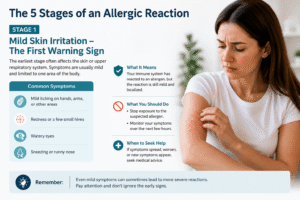
Stage 1: Mild Skin Irritation – The First Warning Sign
The earliest stage of an allergic reaction often affects the skin or upper respiratory system. These symptoms may seem minor, which is why many people dismiss them as temporary irritation. You might notice mild itching on your hands or arms after eating a certain food, or perhaps your skin becomes red and develops a few small hives. Some people experience watery eyes, sneezing, or a runny nose after exposure to pollen or pet dander. At this point, the reaction is usually limited to one area of the body. Your breathing remains normal, and there are no signs that your circulation has been affected.
Although Stage these symptoms are generally considered mild, they should not be ignored—especially if you’ve never experienced them before. An allergic reaction can change rapidly, particularly when food allergies, medications, or insect stings are involved. The first step is to stop exposure to the suspected allergen whenever possible. If you’ve eaten something that appears to be causing symptoms, avoid consuming more of it. If you’ve been stung by an insect, move away from the area to prevent additional stings. Continue monitoring your symptoms over the next several hours. If new symptoms begin to appear or the itching and rash spread, it’s important to seek medical advice rather than assuming the reaction has ended.
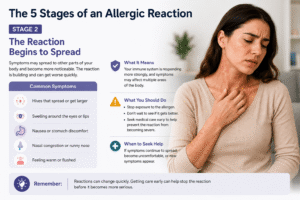
Stage 2: The Reaction Begins to Spread
As the immune response continues, the allergic reaction often becomes more noticeable. Instead of affecting only one area, symptoms may begin spreading throughout the body. Hives can become larger and more widespread, swelling may develop around the eyes or lips, and itching often becomes more intense. Some people also begin experiencing digestive symptoms such as nausea, stomach discomfort, or mild abdominal cramping. Others notice increasing nasal congestion or a feeling of warmth throughout their body. During this stage, many patients still feel relatively well. Unfortunately, this is also the stage where reactions can quickly become unpredictable.
Medical evaluation during this phase allows healthcare providers to determine whether the reaction is likely to progress. Depending on your symptoms, treatment may include medications that reduce inflammation and help relieve allergic symptoms while monitoring for signs of worsening. Seeking care early may help prevent the reaction from becoming more severe.
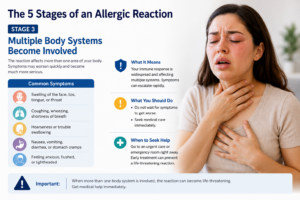
Stage 3: Multiple Body Systems Become Involved
Once an allergic reaction begins affecting more than one body system, it becomes significantly more concerning. Instead of experiencing only skin symptoms, you may notice swelling involving the face, lips, tongue, or throat. Your voice might become hoarse, swallowing may feel uncomfortable, and coughing may develop even without a respiratory infection. Some individuals begin wheezing or feeling short of breath. Others experience repeated vomiting, diarrhea, or severe stomach cramps as the digestive system becomes involved.
These symptoms indicate that your body’s immune response is becoming widespread. One of the biggest dangers during Stage 3 is that symptoms may continue progressing despite initially appearing manageable. Someone who feels only mild throat tightness can develop severe airway swelling within a short period of time. For this reason, medical evaluation should not be delayed. Healthcare professionals will assess your breathing, circulation, oxygen levels, and overall condition while determining whether emergency treatment is needed.
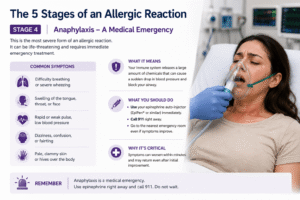
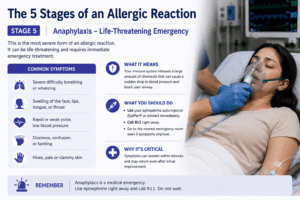
Stage 4: Anaphylaxis – A Medical Emergency
Anaphylaxis is the most severe form of an allergic reaction and requires immediate emergency treatment. During anaphylaxis, the immune system releases massive amounts of inflammatory chemicals into the bloodstream. Blood vessels widen, blood pressure may drop suddenly, and swelling can rapidly block the airway. Symptoms often include difficulty breathing, severe wheezing, swelling of the tongue or throat, chest tightness, dizziness, confusion, pale or bluish skin, a weak pulse, or loss of consciousness. Some people describe a sudden feeling that “something is terribly wrong” just before symptoms become severe.
Anaphylaxis can develop within minutes after exposure to an allergen, although in some cases it may occur more gradually. If an epinephrine auto-injector (EpiPen® or similar device) has been prescribed, it should be used immediately at the first signs of anaphylaxis. Epinephrine is the first-line treatment because it works quickly to reduce swelling, improve breathing, and stabilize blood pressure. After administering epinephrine, call 911 immediately. Even if symptoms begin improving after the injection, emergency evaluation is still necessary. Additional treatment or observation may be required because symptoms can return later. Attempting to “wait it out” can be extremely dangerous.
Stage 5: Recovery Doesn’t Always Mean the Reaction Is Over
Many people believe the emergency ends once symptoms improve, but recovery is actually another important stage. Following a severe allergic reaction, some individuals experience what’s known as a biphasic reaction. This means symptoms return hours after the initial episode, even without additional exposure to the allergen. Because of this possibility, healthcare providers often recommend monitoring patients for several hours after anaphylaxis. During recovery, your medical team will continue checking your breathing, heart rate, blood pressure, and oxygen levels while ensuring symptoms don’t return. This is also the time when doctors discuss long-term management, including allergy testing, avoiding known triggers, and whether you should carry an epinephrine auto-injector in the future. Recovery doesn’t end when you leave the clinic or hospital. Learning about your allergy and preparing for future exposures is an essential part of staying safe.
Can a Mild Allergic Reaction Suddenly Become Severe?
Yes. This is one of the reasons healthcare professionals take allergic reactions seriously. Some people experience only mild itching or a few hives before symptoms stabilize. Others may progress rapidly from a simple rash to difficulty breathing within a short period. Unfortunately, there is no reliable way to predict which reactions will become severe. If symptoms are worsening instead of improving—or if new symptoms develop—it is always safest to seek medical evaluation promptly. Children and adults may experience allergies differently. Although allergic reactions follow similar biological processes, children don’t always describe their symptoms clearly.
Young children may simply become unusually quiet, irritable, or clingy. They may scratch constantly, complain that their mouth feels funny, refuse food, or begin coughing unexpectedly. Adults, on the other hand, are more likely to describe throat tightness, chest discomfort, dizziness, or difficulty swallowing. Parents should pay close attention to behavioral changes following exposure to potential allergens, particularly foods or insect stings.
Common Allergy Triggers
Allergic reactions can occur almost anywhere and at any age.
- Food allergies remain one of the leading causes of severe reactions, particularly peanuts, tree nuts, shellfish, milk, eggs, wheat, soy, and fish.
- Certain medications, including antibiotics and pain medications, can also trigger allergic responses.
- Insect stings from bees, wasps, hornets, and fire ants are another common cause of anaphylaxis.
- Seasonal allergens such as pollen rarely cause life-threatening reactions but frequently trigger hay fever symptoms and asthma flare-ups.
Understanding your personal triggers is one of the most effective ways to prevent future reactions.
How Can You Reduce Your Risk?
Although allergies cannot always be prevented, you can significantly reduce your risk by planning ahead. Avoid known allergens whenever possible and carefully read food labels before eating packaged products. If you have a history of severe allergies, always carry your prescribed epinephrine auto-injector and ensure family members know how to use it. Wear a medical alert bracelet if appropriate, especially if you have medication or food allergies that could cause an emergency. If you’ve experienced an allergic reaction but don’t know what caused it, schedule follow-up testing with an allergy specialist. Education and preparation remain the best tools for preventing future emergencies.
When Should You Visit an Urgent Care Clinic?
Not every allergic reaction requires an emergency room, but many should be evaluated promptly. A walk-in urgent care clinic can assess mild to moderate allergic reactions involving persistent hives, worsening itching, skin rashes, facial swelling that isn’t affecting breathing, or reactions to medications and insect bites that are not progressing to anaphylaxis. Understanding the 5 stages of allergic reaction can help you recognize when prompt medical evaluation is necessary. However, if you develop difficulty breathing, swelling of the tongue or throat, fainting, severe dizziness, blue lips, or signs of anaphylaxis, call 911 immediately rather than attempting to drive yourself to urgent care. Prompt Urgent Care Is Here When You Need Prompt Medical Attention. Allergic reactions can be frightening, especially when you’re unsure whether symptoms will improve or become more serious.
At Prompt Urgent Care, our experienced medical team evaluates and treats a wide range of mild to moderate allergic reactions in a convenient walk-in setting. We provide prompt assessment, appropriate treatment, and guidance on the next steps for your care. If you’re experiencing worsening allergy symptoms that require medical attention, our team is here to help. If symptoms involve severe breathing difficulty or signs of anaphylaxis, call 911 immediately for emergency care.
Frequently Asked Questions
An allergy can cause symptoms such as sneezing, a runny nose, itchy or watery eyes, skin rashes, hives, or itching. Some people may experience swelling, stomach discomfort, or coughing, depending on the allergen and the type of reaction.
Allergic reactions can develop within minutes of exposure to foods, medications, or insect stings. However, some reactions, especially skin allergies, may take several hours or days to appear. The timing depends on the allergen and your sensitivity to it.
Mild allergic reactions may improve within a few hours or days, depending on the trigger and severity. Seasonal allergies can last for weeks or months if exposure continues. Avoiding the allergen and following appropriate treatment can help relieve symptoms.
Common signs include itching, sneezing, hives, skin redness, watery eyes, or swelling after exposure to a possible trigger. Symptoms can vary, so a healthcare provider can help identify the cause. Difficulty breathing, throat or tongue swelling, faintness, or sudden severe symptoms may indicate anaphylaxis. Call 911 immediately and use an epinephrine auto-injector if available.
A mild allergic reaction may resolve within a few hours, although skin symptoms can last several days. More persistent reactions may continue if exposure to the allergen remains ongoing. Severe reactions require emergency treatment, and symptoms can sometimes return after initial improvement.
You may be experiencing an allergic reaction if you develop itching, hives, sneezing, swelling, or other symptoms after contact with a possible allergen. However, other conditions can cause similar symptoms, so a medical assessment may be necessary. If you have difficulty breathing, throat swelling, or feel faint, call 911 immediately.
Yes, urgent care can evaluate mild to moderate allergic reactions, including itching, hives, rashes, and minor swelling. A healthcare provider can assess your symptoms and recommend appropriate treatment. However, if you experience difficulty breathing, throat or tongue swelling, faintness, or other signs of a severe allergic reaction, call 911 immediately. These symptoms may indicate anaphylaxis and require emergency treatment.
This is a helpful explanation of why even mild allergy symptoms deserve attention. I especially liked the point that allergic reactions can change quickly and may not always begin with dramatic symptoms. It is easy to dismiss itching, a few hives, sneezing, or watery eyes as ordinary irritation, but understanding the early warning signs can help people respond more appropriately. The discussion of different triggers is also useful because reactions can come from foods, medications, insect stings, or environmental allergens. Recognizing changes in symptoms and knowing when a reaction is becoming more serious is an important part of staying prepared, particularly for people who have experienced allergies before.
this was really nicely written overall