
Menopause Joint Pain and HRT: Does Hormone Therapy Help?
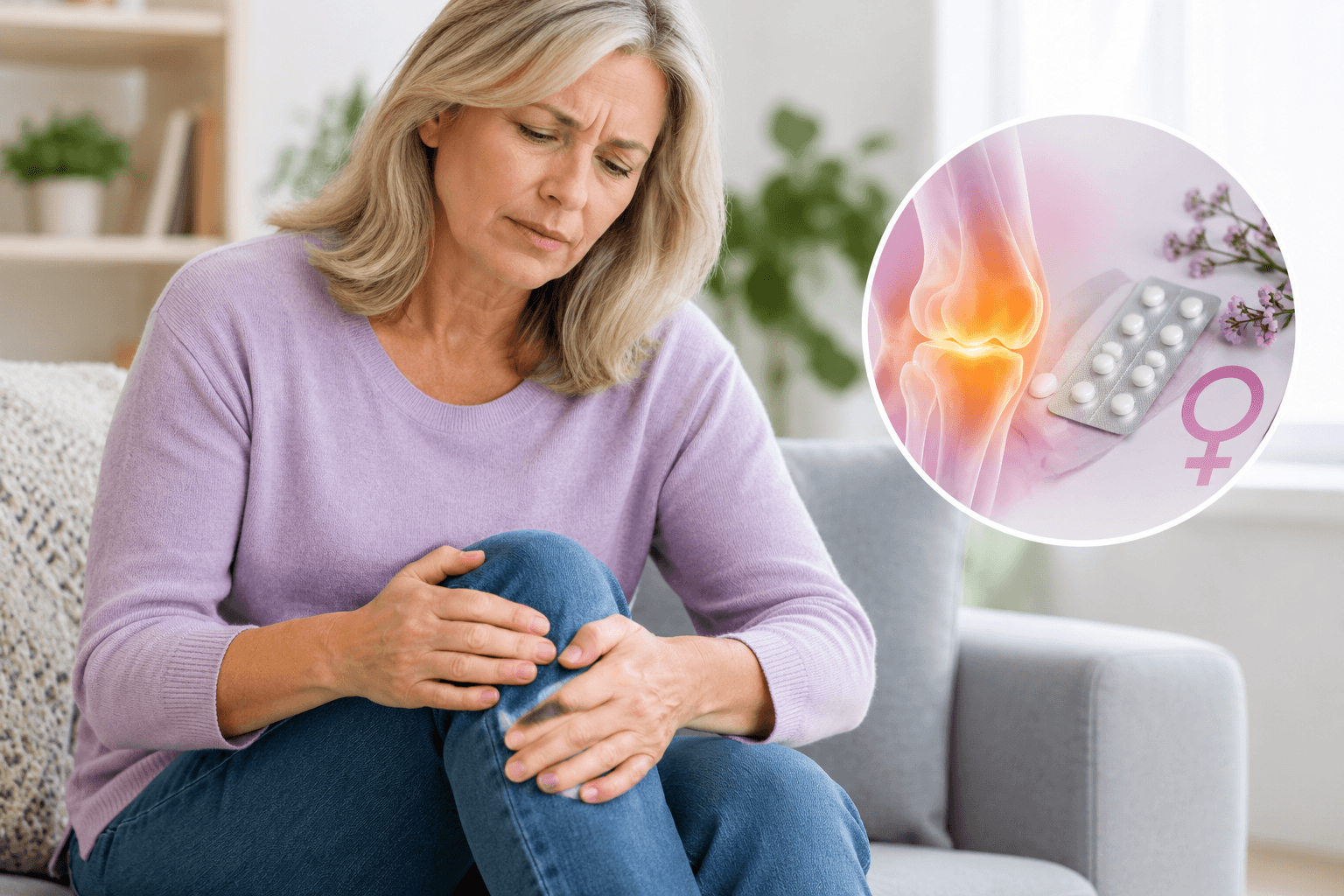
Joint pain is a common concern during menopause, with many women experiencing aching knees, stiff fingers, sore hips, or discomfort in their shoulders and back. These symptoms can begin during perimenopause and continue after menstrual periods have stopped, sometimes affecting sleep, mobility, and everyday activities. One possible contributing factor is the decline in estrogen that occurs during the menopause transition. Estrogen plays a role in maintaining musculoskeletal health, and changes in hormone levels may influence joint tissues, inflammatory processes, and pain sensitivity. This connection has led many women to ask whether hormone replacement therapy (HRT) can help relieve menopause joint pain. Although some research suggests that HRT may provide modest relief, the evidence is not conclusive, and the treatment does not work for everyone.
Understanding what the research actually shows, who may benefit from HRT, and what risks to consider can help women make informed decisions with their healthcare professionals.
How Does Low Estrogen Contribute to Menopause Joint Pain?
Estrogen does more than regulate the menstrual cycle. Estrogen receptors are present in several structures involved in movement, including cartilage, bones, synovial membranes, muscles, and tendons. These tissues help joints move smoothly, withstand physical stress, and maintain stability. During perimenopause and menopause, estrogen levels fluctuate and eventually decline. These changes may influence the body’s inflammatory responses and the tissues responsible for joint function, potentially contributing to aching, stiffness, and musculoskeletal discomfort.
Research has found an association between the menopause transition and an increased likelihood of joint and muscle symptoms. However, the exact mechanisms remain under investigation, and declining estrogen is not necessarily the sole cause of pain.
Factors Contributing to Menopause Joint Pain
- •Changes in inflammation: Estrogen influences inflammatory signaling in the body. Changes in estrogen levels may affect these processes, although the relationship between estrogen and inflammation is complex.
- •Alterations in pain sensitivity: Hormonal changes, disrupted sleep, and other menopausal symptoms may influence how intensely discomfort is experienced.
- •Changes in muscle strength: Maintaining muscle mass becomes increasingly important with age. Weaker muscles may provide less support for the joints, increasing discomfort during movement.
- •Existing joint conditions: Osteoarthritis and other musculoskeletal disorders may develop or become more noticeable during midlife, making it important to investigate persistent symptoms.
Menopause-associated joint pain may affect several joints without obvious swelling. However, there is no single test that confirms estrogen deficiency as the cause of joint pain. A healthcare professional may need to rule out conditions such as osteoarthritis, rheumatoid arthritis, thyroid disorders, and vitamin deficiencies before attributing symptoms to menopause.
Can HRT Help Relieve Menopause Joint Pain?
Hormone replacement therapy replaces estrogen that the body no longer produces at the same levels after menopause. Depending on a woman’s circumstances, treatment may involve estrogen alone or estrogen combined with a progestogen. Because estrogen interacts with tissues involved in joint health, researchers have investigated whether restoring estrogen levels can reduce menopause-related pain and stiffness.
The evidence suggests that HRT may provide some relief from joint pain, but the average benefit appears modest. It is not a guaranteed treatment, and research has not established that HRT reliably treats every type of musculoskeletal discomfort associated with menopause.
How HRT May Help Joint Pain?
Estrogen is involved in processes that regulate inflammation and maintain musculoskeletal tissues. Restoring estrogen through hormone therapy may influence these processes and reduce certain joint symptoms in some women.
Joint pain often occurs alongside hot flashes and night sweats. HRT is an established treatment for these symptoms. When sleep improves, women may cope better with discomfort during the day.
Clinical research has reported modest improvements in joint pain among women receiving estrogen therapy compared with those receiving a placebo. However, these findings do not prove that HRT can prevent cartilage damage, reverse osteoarthritis, or repair an already damaged joint. The response may also vary according to the underlying cause of the pain, the hormone therapy used, and individual health factors.
What Does Research Say About HRT and Menopause Joint Pain?
Although the biological relationship between estrogen and joint health is an important area of research, the clinical evidence for HRT as a treatment for joint pain remains limited. Studies have examined joint symptoms in women receiving hormone therapy, but relatively few have been designed specifically to establish whether HRT is an effective treatment for menopause-related musculoskeletal pain.
Findings From the Women’s Health Initiative
The Women’s Health Initiative (WHI) included a large randomized trial involving postmenopausal women who had undergone a hysterectomy. Researchers examined whether estrogen-only therapy affected joint symptoms compared with a placebo. The analysis found that joint pain was common in both groups. After one year, approximately 76.3% of women receiving estrogen reported joint pain, compared with 79.2% of women receiving a placebo. The difference was statistically significant, and the reduction in reported pain persisted through the third year. These results suggest that estrogen therapy may modestly reduce joint pain in some women. However, the difference between the groups was small, meaning that the findings should not be interpreted as evidence that HRT provides substantial relief for everyone.
Evidence From Other Clinical Studies
Other research has examined combined hormone therapy and musculoskeletal symptoms. Some studies have reported fewer joint or muscle complaints among women receiving hormone therapy than among those receiving a placebo. Researchers have also investigated whether hormone therapy affects conditions such as hand osteoarthritis and shoulder pain. Although some findings are promising, these studies have limitations, including small sample sizes and differences in study design.
Consequently, it remains unclear which women are most likely to experience joint-pain relief, which treatment regimen would be most effective, and how long any benefit might last.
What Do These Findings Mean for Women?
The available research supports the possibility that HRT may improve joint symptoms in some menopausal women. However, the evidence is not strong enough to establish it as a reliable stand-alone treatment for joint pain. A clinical review published in the journal Menopause similarly concludes that hormone therapy may have a role in managing joint pain associated with estrogen deficiency, while emphasizing the need for larger, well-designed clinical trials. The practical takeaway is that HRT may be worth discussing when joint discomfort occurs alongside other troublesome menopausal symptoms, but treatment decisions should consider the woman’s overall health and the possible causes of her pain.
Who May Benefit From HRT for Menopause Joint Pain?
HRT may be an option for women whose joint discomfort occurs during the menopause transition, particularly when they also experience symptoms for which hormone therapy is an established treatment, such as hot flashes and night sweats. However, experiencing joint pain during menopause does not automatically mean that estrogen deficiency is responsible or that HRT is the best treatment.
Factors a Healthcare Professional Will Consider
- •Other menopausal symptoms: Women experiencing troublesome hot flashes, night sweats, or related sleep disturbances may have additional reasons to consider HRT.
- •Medical history: A history of certain cancers, blood clots, stroke, liver disease, or cardiovascular conditions may affect whether hormone therapy is appropriate.
- •Age and timing: For otherwise healthy women younger than 60 or within 10 years of menopause onset, the overall benefit-risk balance of HRT is generally more favorable when there are no contraindications.
- •The cause of joint pain: Symptoms caused by osteoarthritis, rheumatoid arthritis, an injury, or another medical condition may require specific treatment rather than hormone therapy alone.
- •Personal preferences: Treatment decisions should account for symptom severity, quality of life, and the benefits and risks relevant to the individual.
If joint pain is the only symptom, the evidence supporting HRT is particularly limited. A clinician can help determine whether other treatments are more appropriate or whether HRT may be reasonable for additional menopausal symptoms.
What Are the Risks of Using HRT for Menopause Joint Pain?
HRT can be highly effective for appropriate menopausal symptoms, but it also carries potential risks. These vary according to the type of hormone therapy, dose, route of administration, duration of use, and the woman’s medical history. Because the evidence for joint-pain relief is limited, it is particularly important to weigh these risks against the benefits expected from treatment.
Common Side Effects
Some women experience side effects when starting HRT, including:
These may improve over time, but persistent or troublesome effects should be discussed with a healthcare professional.
Serious Risks to Consider
- •Breast cancer risk: Combined estrogen-progestogen therapy can increase breast cancer risk, particularly with longer use. Estrogen-only therapy has a different risk profile.
- •Blood clots and stroke: Oral estrogen can increase the risk of venous blood clots. Estrogen delivered through patches or gels generally has a lower risk. Stroke risk also varies according to age and underlying health.
- •Uterine lining protection: Women who still have a uterus generally need a progestogen alongside systemic estrogen to prevent endometrial cancer risk.
HRT may be unsuitable for some women, including those with certain hormone-sensitive cancers or a history of particular medical conditions. These situations require individualized medical advice. The decision to use HRT should therefore be based on the full clinical picture, not solely on the possibility of relieving joint pain.
What If HRT Does Not Relieve Menopause Joint Pain?
Not every woman experiences joint-pain relief with HRT. Even when estrogen deficiency contributes to discomfort, other factors may continue to cause symptoms. If hormone therapy does not improve your joint pain, it is important to reassess the cause rather than assume that you need a higher dose or a different hormone regimen.
Conditions to Investigate
A healthcare professional may investigate other conditions, including:
- •Osteoarthritis: A condition involving changes in joint cartilage and surrounding structures that commonly affects the knees, hips, and hands.
- •Inflammatory arthritis: Conditions such as rheumatoid arthritis can cause persistent swelling, warmth, and stiffness and may require specific medical treatment.
- •Thyroid disorders: An underactive thyroid can contribute to muscle aches and joint discomfort.
- •Vitamin deficiencies: Low vitamin D levels may contribute to musculoskeletal symptoms, particularly when deficiency is significant.
- •Other musculoskeletal conditions: Tendon disorders, previous injuries, and nerve-related problems can produce symptoms that overlap with menopause-related joint pain.
There is no single blood test that confirms menopause as the cause of joint pain. Your doctor may assess the pattern of symptoms, examine the affected joints, and recommend blood tests or imaging if the findings suggest another condition.
If you are already taking HRT, do not increase the dose, change the formulation, or stop treatment without discussing it with your prescribing clinician. The next step should depend on your symptoms, response to treatment, and individual medical circumstances.
What Are the Alternatives to HRT for Menopause Joint Pain?
When HRT is unsuitable, unwanted, or ineffective for joint pain, other treatments may help. The most appropriate option depends on the underlying cause and how severely symptoms affect daily life.
Exercise and Physiotherapy
Regular physical activity helps maintain muscle strength, flexibility, and joint function. Low-impact activities such as walking, swimming, and cycling may be suitable for many women, while progressive resistance exercises can help maintain the muscles that support joints. A physiotherapist can recommend exercises based on the joints affected and the severity of discomfort. This is particularly helpful when pain makes it difficult to remain active without aggravating symptoms.
Pain-Relieving Treatments
Depending on the diagnosis, a clinician may recommend topical anti-inflammatory medicines, oral pain relievers, or other targeted treatments. These options have different benefits and risks, so the choice should take account of existing health conditions and other medications. For example, topical anti-inflammatory treatments may be appropriate for some cases of localized osteoarthritis, whereas inflammatory arthritis may require a different treatment approach.
Supporting Overall Musculoskeletal Health
Adequate protein intake, a balanced diet, sufficient calcium and vitamin D, and good sleep habits can support muscle and bone health. Maintaining a healthy weight, where appropriate, may also reduce stress on weight-bearing joints. These measures are not guaranteed to eliminate menopause-related joint pain, but they can form part of a broader management plan. They should complement, rather than replace, appropriate medical evaluation and treatment.
Importantly, supplements, herbal products, and so-called natural hormone treatments should not be assumed to provide the same benefits as prescribed HRT. Discuss them with a healthcare professional before use, particularly if you take other medications.
When Should You Discuss HRT With Your Doctor?
If joint pain develops during perimenopause or menopause, a medical appointment can help establish whether hormonal changes may be contributing and whether HRT is appropriate for your overall symptoms. Before your appointment, make a note of when the pain started, which joints are affected, whether symptoms are worse in the morning or after activity, and whether you experience other menopausal symptoms. Include a list of your current medications and supplements.
Questions to Ask Your Healthcare Provider
- •Could menopause be contributing to my joint pain, or should other conditions be investigated?
- •Would HRT be appropriate for my other menopausal symptoms?
- •How likely is HRT to improve my joint pain, given the current evidence?
- •What benefits and risks would apply to my medical history?
- •Are there non-hormonal treatments that may be more suitable?
- •How will we assess whether treatment is working, and when should I have a follow-up?
If HRT is prescribed, follow-up appointments allow your clinician to review symptom improvement, side effects, and whether the treatment remains appropriate. Treatment for menopause joint pain can be reassessed if the expected benefits do not occur.
When to Seek Urgent Medical Attention
Do not delay seeking medical attention if:
- •A joint becomes suddenly very painful, hot, red, or markedly swollen, particularly if you also have a fever
- •Persistent swelling in one or more joints
- •Prolonged morning stiffness lasting more than an hour
- •Progressively worsening pain despite treatment
These symptoms may indicate a condition requiring specific treatment.
Conclusion: Does HRT Help Menopause Joint Pain?
Hormone replacement therapy may help some women experience less joint pain during menopause, but the benefits demonstrated in clinical research have generally been modest. Although estrogen influences joint tissues and inflammatory processes, researchers have not yet established HRT as a reliable stand-alone treatment for menopause-related joint pain. The strongest reason to consider HRT is often the presence of other troublesome menopausal symptoms, such as hot flashes and night sweats, for which hormone therapy is an established treatment. Whether it is appropriate when joint pain is the main concern requires an individualized discussion about the limited evidence, potential risks, and alternative treatments.
If you are experiencing menopause joint pain, start by discussing your symptoms with a qualified healthcare professional. Identifying other possible causes, choosing appropriate treatment, and maintaining muscle strength and mobility can help you manage discomfort and protect your long-term musculoskeletal health.
Get Evaluated at Prompt Urgent Care in San Antonio
If you are looking for urgent care in San Antonio, Prompt Urgent Care offers convenient access to women’s and men’s health services in a comfortable setting. Services include women’s health screenings, pregnancy testing, and comprehensive health care. The team can evaluate a range of health concerns and help you understand the appropriate next steps for your care.
Medical Disclaimer: This article is intended for educational purposes and does not replace professional medical advice, diagnosis, or treatment. Consult a qualified healthcare professional before starting, changing, or stopping HRT or any other medication.