
Can Cataracts Come Back? Signs You Should Get Your Eyes Checked

Cataract surgery is performed to remove a cloudy natural lens and replace it with a clear artificial lens. For many people, this results in noticeably clearer vision. But if blurriness, glare, or other vision problems appear again months or years later, it is understandable to wonder: can cataracts come back? The short answer is that the original cataract cannot grow back once the natural lens has been removed. However, some people develop a condition called posterior capsule opacification (PCO), commonly called a secondary cataract. It can produce symptoms that feel very similar to the original cataract, including cloudy vision and increased glare. PCO can occur weeks, months, or even years after cataract surgery.
More importantly, not every change in vision after cataract surgery is caused by PCO. Some symptoms can point to other eye conditions that require medical attention. Knowing the signs to watch for can help you decide when it is time to have your eyes checked.
Can Cataracts Come Back After Surgery?
If you have already undergone cataract surgery and your vision is becoming cloudy again, you may assume the cataract has returned. That is not actually what happens. During cataract surgery, the eye’s cloudy natural lens is broken up and removed. An artificial intraocular lens (IOL) is then placed inside the eye to help focus light properly. Because the natural lens containing the cataract has been removed, the original cataract cannot form again in that eye. However, a thin capsule is intentionally left inside the eye to support the artificial lens. Over time, cells can grow across the back of this capsule and make it cloudy. This is PCO, and its symptoms may be so similar to cataracts that people commonly describe the experience as their cataract “coming back.”
The National Eye Institute notes that secondary cataracts are common and may occur in up to 2 out of 5 people who have cataract surgery. So when asking do cataracts come back, it is helpful to focus less on whether another cataract has formed and more on whether your vision has changed. New or worsening symptoms deserve an eye examination.
Signs You Should Get Your Eyes Checked
Changes in vision can develop gradually, making them easy to overlook at first. If you have previously had cataract surgery, pay attention to whether everyday activities such as reading, driving, watching television, or recognizing details are becoming more difficult. The following signs are particularly worth discussing with an eye care professional.
1. Cloudy or Blurry Vision Has Returned
One of the most noticeable warning signs is vision that becomes cloudy again after previously improving following cataract surgery. You might notice that objects no longer appear as sharp, reading small print is becoming difficult, or it feels as though you are looking through a slightly foggy window. These changes can develop gradually, so you may not immediately recognize how much your vision has changed. PCO is one possible explanation. The American Academy of Ophthalmology notes that it can develop weeks, months, or years after cataract surgery and cause blurry vision as the capsule holding the artificial lens becomes hazy or wrinkled.
Persistent blurriness can have other causes as well, including dry eye, changes in your eyeglass prescription, retinal conditions, or other eye problems. An eye examination is therefore more useful than assuming that your cataract has returned.

2. Glare Is Becoming More Noticeable
Increasing glare can be another sign that something has changed. Bright sunlight may suddenly feel uncomfortable, headlights from approaching vehicles may appear unusually intense, or indoor lights may interfere with your vision more than they previously did. This can become particularly noticeable when driving at night or moving between brightly lit and darker environments. PCO can affect the way light travels through the eye, potentially producing glare and light sensitivity. You may also notice that bright lights seem scattered or make it temporarily harder to see surrounding objects clearly. Because glare can occur with several eye conditions, a noticeable or persistent change is worth mentioning during an eye examination, particularly when it occurs alongside blurry or hazy vision.
3. You Are Seeing Halos Around Lights
Halos can appear as rings or glowing circles surrounding headlights, streetlights, lamps, or other bright objects. Occasional visual effects around very bright lights are not necessarily evidence of an eye problem. However, new or increasingly noticeable halos—especially after cataract surgery—should not automatically be dismissed. PCO can cause halos, glare, blurred vision, light sensitivity, and reduced visual clarity. If halos are beginning to interfere with driving, reading, or normal daily activities, an eye care professional can examine the artificial lens, capsule, cornea, retina, and other structures to determine what is causing the change.
4. Your Night Vision Is Getting Worse
Difficulty seeing at night is a common symptom of cataracts, so experiencing the same problem after surgery can understandably raise concerns. You might find it harder to distinguish objects in low light, read road signs, or adjust when moving between bright and dark environments. Headlight glare may also make nighttime driving uncomfortable or make objects around bright lights appear less clear. The important point is whether your night vision has changed from what became normal after surgery. If you previously saw more clearly at night but are now noticing a gradual decline, increased glare, or difficulty focusing in dim conditions, it is worth having your eyes checked. An eye examination can help determine whether PCO or another vision problem is responsible rather than assuming the original cataract has grown back.
5. Colors Appear Duller or Less Vivid
Cataracts can affect how clearly people perceive colors. After cataract surgery, some patients notice that colors appear brighter because the cloudy natural lens has been replaced. If colors later start appearing dull, washed out, or less distinct, especially when accompanied by hazy vision, it may indicate another change affecting your vision. Color changes alone cannot diagnose PCO or another eye condition. However, they provide useful information for your eye doctor when considered alongside other symptoms.
6. Your Vision Improved After Surgery but Is Declining Again
This is perhaps the pattern most likely to make someone ask can cataracts come back? You may have enjoyed clear vision for months or even years after surgery before gradually noticing that reading is harder, objects are less defined, or your overall visual clarity is decreasing. You may also find that everyday activities such as driving, watching television, or recognizing details require more effort than before. That pattern can occur with PCO, but other conditions affecting the retina, cornea, optic nerve, or artificial lens can also change vision. This is why the timing of symptoms matters. Tell your eye doctor when you first noticed the change, whether it affects one or both eyes, whether it is getting progressively worse, and whether you are also experiencing glare, halos, pain, floaters, or flashes. An eye examination can help identify the actual cause rather than assuming the cataract has returned.
7. Your Eyeglass Prescription Keeps Changing
Vision naturally changes with time, and needing new glasses does not necessarily indicate a serious problem. However, frequent prescription changes combined with declining visual quality deserve attention. If stronger glasses do not provide the clarity you expect, or your vision continues changing soon after receiving a new prescription, there may be another explanation. You may notice that text remains blurry despite updated glasses, distant objects are becoming harder to see, or your prescription no longer seems to provide consistent vision. A comprehensive eye examination can determine whether the issue is simply a refractive change or whether PCO or another part of the eye is affecting your vision.
8. New Floaters or Flashes Appear
Floaters can look like dots, threads, cobwebs, or small shadows moving across your vision. Flashes may resemble brief streaks or camera-like flashes of light. A few floaters can occur normally, especially with aging. However, a sudden burst of new floaters, repeated flashes, or a dark curtain or shadow moving across your vision needs immediate ophthalmic attention because these can be warning signs of retinal detachment. These symptoms are especially important because they are not typical evidence that a cataract has simply returned. Assuming every post-surgery vision change is another cataract could delay evaluation of a more urgent condition.
9. Your Eye Is Very Red or Painful
Cataracts themselves generally cause gradual changes in vision rather than severe eye pain or significant redness. For this reason, an eye that becomes very red, painful, swollen, or increasingly uncomfortable should not automatically be blamed on a cataract or secondary cataract. These symptoms can have other causes, some of which may require prompt medical evaluation. Pay particular attention if redness or pain occurs together with worsening vision, unusual discharge, increasing sensitivity to light, swelling around the eye, or difficulty keeping the eye open. If you recently had cataract surgery, new or worsening symptoms are especially important to report because your surgeon needs to determine whether they are part of the expected recovery process or require further examination.
The National Eye Institute advises contacting an eye doctor right away following cataract surgery for symptoms including vision loss, significant pain that does not improve, very red eyes, flashes of light, or numerous new floaters. Follow the recovery instructions provided by your surgeon and avoid trying to diagnose post-surgical symptoms yourself.
10. You Suddenly Lose Part or All of Your Vision
Gradually developing cloudy vision is very different from a sudden partial or complete loss of sight. If your vision disappears suddenly, becomes dramatically darker, or part of your visual field seems to be missing, do not assume that cataracts have come back. Cataracts and PCO generally cause more gradual changes, while sudden vision loss can be associated with conditions that require immediate medical attention. Other warning signs may occur alongside the vision change. These can include a dark curtain or shadow moving across your field of vision, a sudden increase in floaters, repeated flashes of light, severe eye pain, or vision changes following significant eye trauma. Even if there is no pain, sudden loss or major alteration of vision should be taken seriously. These symptoms may be associated with retinal or other serious eye problems and require immediate emergency or specialist eye care.
What Is a Secondary Cataract?
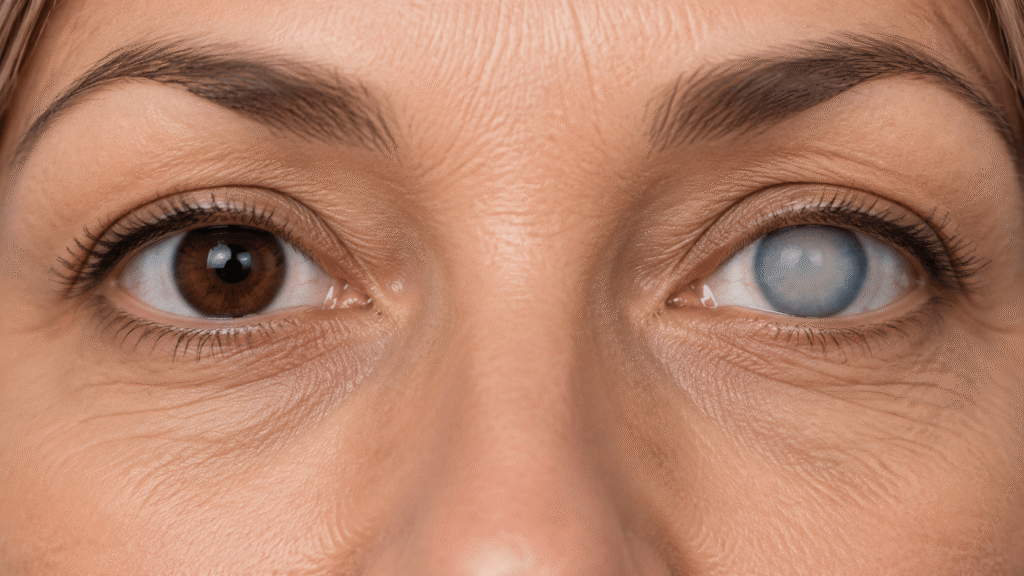
Understanding secondary cataract helps explain why so many people believe cataracts can return after surgery. During cataract surgery, the cloudy natural lens is removed, but part of the clear capsule surrounding it remains so that it can support the artificial lens. Cells left in this area can later migrate and multiply across the posterior capsule. As the capsule becomes cloudy, it can interfere with the light passing through the eye. This condition is called posterior capsule opacification. Although “secondary cataract” is commonly used to describe it, it is not another cataract forming inside the artificial lens.
Symptoms can include blurry or cloudy vision, glare, halos, light sensitivity, reduced contrast, and difficulty reading. Because these symptoms overlap with those of an original cataract, an eye examination is needed to determine what is actually causing them.
Is Scar Tissue After Cataract Surgery the Same as a Secondary Cataract?
Patients may hear PCO described as scar tissue after cataract surgery. The National Eye Institute similarly explains that scar tissue can develop after cataract surgery and make vision cloudy again. This cloudiness forms in the capsule behind the artificial lens rather than from the removed natural lens growing back. As the capsule becomes cloudy, you may begin noticing symptoms similar to those you experienced before cataract surgery, such as blurred or hazy vision, increased glare, halos around lights, or difficulty seeing clearly in low-light conditions. Because these symptoms can develop gradually, some people mistakenly believe their original cataract has returned.
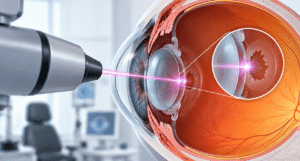
If PCO begins interfering with vision, an ophthalmologist may recommend YAG laser capsulotomy. During this procedure, a laser creates an opening in the cloudy capsule so that light can pass through more clearly. The NEI describes this treatment as quick and painless, and many people notice improved vision within a few days. An eye examination is still necessary to confirm that PCO is actually responsible for the symptoms before treatment is recommended. That is another reason not to assume that cloudy vision means you need cataract surgery again.
Can Cataract Surgery Be Redone?
The query can cataract surgery be redone often comes from people whose vision has become blurry again after an initially successful operation. It is understandable to think another cataract procedure may be necessary when familiar symptoms such as cloudiness, glare, or reduced visual clarity return. For PCO, however, the original cataract operation generally does not need to be repeated. Because the cloudy natural lens has already been removed and replaced with an artificial lens, treating PCO involves addressing the cloudy capsule behind that lens rather than removing another natural lens. YAG laser capsulotomy is commonly used when PCO is affecting vision. The procedure creates a small opening in the cloudy capsule, allowing light to pass through more clearly. This is different from the original cataract surgery and does not involve removing another cataract.
There are other circumstances in which someone may need an additional eye procedure—for example, if there is a problem involving the artificial lens or another structure of the eye—but that is different from simply removing the same cataract again. An ophthalmologist needs to examine the eye and identify the cause of the vision problem before determining whether any additional procedure is appropriate.
What About Problems After Secondary Cataract Treatment?
Although YAG laser capsulotomy is commonly performed for PCO, it is still important to follow your ophthalmologist’s instructions after treatment and pay attention to unexpected changes in your eyes or vision. Some people may temporarily notice mild visual changes after the procedure, but your ophthalmologist can explain what is expected based on your individual situation. If your vision does not improve as expected or you develop new symptoms, contact your eye care provider rather than assuming they are a normal part of recovery.
Symptoms such as sudden vision loss, significant or worsening eye pain, a sudden increase in floaters, repeated flashes of light, or a curtain-like shadow across part of your vision require prompt medical attention. These symptoms can indicate an eye problem that needs evaluation rather than simply being problems after secondary cataract treatment. The key point is that unexpected symptoms following treatment should not be self-diagnosed. If something about your recovery seems significantly different from what your ophthalmologist told you to expect, contact them promptly for guidance.
How Regular Eye Checks Help After Cataract Surgery?
Even when your vision feels good, routine eye examinations remain important after cataract surgery. An eye examination can look beyond the artificial lens and assess other structures that affect sight. This is particularly important because blurred vision after surgery does not always mean PCO. Dry eye, refractive changes, retinal conditions, macular problems, or other eye diseases can also reduce visual quality. Several potential causes of persistent blurry vision after cataract surgery may include refractive error, dry eye, and PCO.
Keep your scheduled follow-up appointments after surgery and tell your eye doctor about changes rather than waiting until vision significantly interferes with daily life.
When an Eye Problem Needs Timely Medical Attention?
The main takeaway from “can cataracts come back?” is that the original cataract does not return—but your vision can change for other reasons. Cloudy vision, increasing glare, halos, declining night vision, and difficulty reading are reasons to arrange an eye examination, particularly if your eyesight initially improved after cataract surgery and has begun worsening again. Cataracts, PCO, and post-cataract surgical care should be evaluated and treated by an ophthalmologist or appropriate eye specialist. Prompt Urgent Care does not replace that specialist care and does not perform cataract surgery or treatment for PCO.
However, eye problems are not limited to cataracts. Prompt Urgent Care in San Antonio can provide walk-in evaluation for appropriate non-life-threatening urgent eye concerns and minor eye injuries, helping patients understand when additional specialist care may be necessary. If you are unsure about an acute, non-emergency eye concern, you can contact the clinic before visiting. For sudden vision loss, severe eye pain, serious eye trauma, a sudden shower of floaters or flashes, or a curtain-like shadow across your vision, seek immediate emergency or ophthalmic care rather than waiting for a routine urgent care visit.
For non-life-threatening urgent medical concerns, call Prompt Urgent Care at +1 210-585-2273.
Frequently Asked Questions
No. Once a cataract and the natural lens containing it have been surgically removed, that original cataract cannot return. What may develop later is PCO, commonly called a secondary cataract, which can produce similar cloudy or blurry vision.
The original cataract-removal procedure is not normally repeated simply because PCO develops. PCO is commonly treated with YAG laser capsulotomy. Other eye problems may occasionally require additional procedures, depending on what an ophthalmologist finds.
Each eye can undergo cataract surgery if cataracts affect both eyes, usually as separate procedures. In an eye that has already had its natural lens removed, later cloudy vision does not normally mean another cataract-removal operation is needed.
A cataract develops when the normally clear natural lens becomes cloudy. As the cataract progresses, people may experience blurred or cloudy vision, faded colors, poor night vision, glare, halos, or frequent changes in their glasses prescription.
No. The cataract itself cannot grow back after the cloudy natural lens has been removed. New cloudiness after surgery may result from PCO or another eye condition.
The original cataract cannot come back after surgery. However, PCO can occur weeks, months, or years later and make vision cloudy again.
The phrase second cataract surgery is sometimes used informally when someone needs another procedure after cataract surgery. If PCO is responsible for renewed cloudy vision, treatment is generally YAG laser capsulotomy rather than another cataract-removal surgery.